Sunday, 9 September 2012

Red anemones


anemone (n.) 

Flowering plant genus, 1550s, from M.Fr. anemone (16c.) and directly from L. anemone, from Gk. anemone "wind flower," lit. "daughter of the wind," from anemos "wind" (cognate with L. anima; see animus) + -one feminine patronymic suffix.


© Alan Dicks, 2012
I bought this bunch of blood-red anemones yesterday for $5, from a great little dairy (newsagents) on Glenmore Street. It has a crazy selection of cut flowers, especially for a tiny dairy (which, incidentally, is two doors down from another which is almost exactly the same). Lilies. Irises. Orchids. Arums. Narcissi. And these wonderful anemones.

© Alan Dicks, 2012
I found out today that (for rather obvious reasons) they're called poppy anemones. They're also known as Spanish marigolds and anemone de Caen. Their Latin name, Anemone coronaria, presumably refers to their attractive ruff of leaves just below the flowers. While red appears to be the original colour, they now come in an array of primaries and pastels. They're easy to grow, and most nurseries will sell the de Caen hybrids. 

De Caen hybrids
The double-flowered varieties always strike me as a bit blowzy, but the singles are stunning. The red ones are particularly handsome. And they look great next to Danny's red retro lamp. I particularly love their simplicity (the buttercup family to which they belong is one of the world's most primitive); their unapologetically bold colouring; and their stiff, sinuous stems. It's just a shame about the name. It's not that anemone is an unpleasant word. But like 'thief' and 'championing', it's one I really struggle to pronounce. Perhaps I should start using the old vernacular name 'wind flower' instead?

A. coronaria in the wild (Shokeda forest, Israel)
© Zachi Evenor
Like buttercups, anemones grow in vast colonies. It's easy to see why the anemone fields of the Negev desert are famous. Their north European cousins are less vibrant, but certainly no less attractive. The springs of my childhood were spent in the anemone-carpeted woods of Kent. In early March, long before the bluebells were out, the forest floor would become white with wood anemones. I miss them a lot...

Wood anemones (A. nemorosa)at Milstead, Kent
© Alan Dicks, 2010

Friday, 7 September 2012

Painted Wolf

Review of Painted Wolf by Pearl Fiction (2012)

Former Zeigeist band member Per Störby (AKA Pearl Fiction) is so damn hot off the press he doesn't even have an entry on Wikipedia. In fact, there's precious little about him online at all. Which is all rather surprising because his debut album - Painted Wolf - did come out in January. And it's bloody brilliant! 


Painted Wolf opens with "Run" - dance-y, deliciously darkwave electropop and infused with a wonderfully catchy sea shanty-like bass. It's a well-chosen opening track, nicely setting the tone of the album.

The second track, "Ritual" wouldn't be out of place on a Cut Copy album - it is pure Nu-Disco - funky, fun, and quite a big departure from his earlier work. 

It took me a while to get "Insomnia", but now it has become one of my favourite tracks on the album. The gravelly, menacing voice that annouces this track soon gives way to chirpy OMD-styles synths and a colourful chorus sung in canon. The result is a perfectly-rendered impression of the kaleidoscopic delirium that comes from sleep deprivation.


Track four, "Talking Seems To Fade Away", is irrepressibly bouncy, even though it seems to be talking about relationship breakdowns. Stylistically, it reminds me a lot of Empire of the Sun and other Aussie indietronica outfits. Which is certainly no bad thing.


"Stories From A Purple Soul" is one of my favourite tracks ontghe album. If you like The xx you'll like this. It has a lot of elements I hear in some of the poppier Zeigeist tracks

The title track, "Painted Wolf" is the danciest and most accessible on the album. It's classic indietronica. Very similar to Cut Copy, but with elements of darkwave and just the tinest hint of Italo Disco in the drums.


"The Ruby Fever" is catchy, funky indietronica that brings to mind fellow Scandos Annie and Miike Snow. As does "This is not the end". Neither is a favourite track, but they're fun and thoroughly accessible.

If I had to chose a favourite track on the album, it would be "Strangulated". It's the closet Pearl Fiction gets to Zeigeist - in fact, it would fit seamlessly into The Jade Motel. Haunting synths and a melody that reminds me of David Bowie's China Girl.

After the dark, dreamy "Strangulated" pop-y, funky "If You Wanna" was the last thing I wanted. But despite my initial disappointment at the change in tempo, it's catchy, feel-good and fun. Not a bad way to end the album on at all.

Oh, and in case you haven't already noticed, he's rather cute too!
Via themusicsnobmilitia.blogspot.com 

Overall, I'd say the album is far more accessible than The Jade Motel and generally lighter and funkier. If you like Australian-style indietronica, you will love it. If you're looking for the same hit you get off Zeigeist - the cold, industrial, space-y synths and dark, dramatic melodies you may be a little disappointed. It's not that they're missing entirely from Painted Wolf - they're just diluted with a lot of the lighter elements of electropop. 

Anyway, this is my first attempt at an album review. It has been a lot more work than I thought, and I've lost count of the times I've listened to the album over the past three days. The fact that I' still not bored of it is a good testament to how good it is! I'm very surprised there aren't more reviews of Painted Wolf out there - I'd be really keen to hear what other people think of it.


More on Pearl Fiction


Tuesday, 4 September 2012

Aye-aye

According to local legends, the aye-aye is a demon that can kill just by pointing a finger. That fact alone makes it a worthy addition to the Wunderkammer. However, the aye-aye's more prosaic characteristics are equally fascinating...

Close-up of baby Aye-aye
via Factzoo.com
Like much of Madagascar's flora and fauna, it is found nowhere else on Earth. They are the largest nocturnal primate in the world. Although it is classified as a lemur, it has continually-growing incisors like rodents and uses bat-like echolocation to find its prey. It occupies the ecological niche elsewhere filled by woodpeckers (of which there are none in Madagascar) and, most remarkably of all, hangs upside down to have sex!

© Natural History Museum, London
Its fabled "fingers of doom" are actually sophisticated tools which, like some arboreal Gagoolthe aye-aye methodically taps tree trunks to seek out grubs. This great video from National Geographic shows the aye-aye in action..  


The thriving folklore around the aye-eye is also one of the main reasons its numbers are in steady decline. In 1933 scientists thought it was extinct, but it was rediscovered in 1957. Unfortunately, many Malagasy still continue to persecute them, not only because of deep-seated superstitions but because they supplement their diet of grubs with farmers' fruit and veg. Also, as is the case in much of the tropics, Madagascar's forests are being felled at an alarming rate.

I have naturalist Gerald Durrell to thank for first introducing me to the aye-aye. During his later life, he was instrumental in aye-aye conservation, setting up an important captive breeding population and working with the Malagasy government and people to  ensure a future for this most curious creature of the night.

Find out more about the aye-aye and how you can help:


Saturday, 1 September 2012

Passenger pigeon

In the 1870s, the passenger pigeon was one of the commonest birds in the world. By 1 September 1914, it was extinct.

J.G. Hubbard, 1898 via Wisconsin Historical Society
You might well ask how could this happen. The answer, as it so often is with these things, is us. In very simple terms, we killed and ate them into extinction. Of course, there is usually more than one contributing factor to an extinction. In the passenger pigeon's case, habitat loss also played its part. But it would be fair to say that human greed in one form or another was entirely responsible for the complete annihilation of a most extraordinary bird.

John Audubon, 1824
Extraordinary, you say? But it's just a pigeon. A rather pretty pigeon, if Audubon's illustration is anything to go by (which, of course it is), but still a pigeon.

In fact, the incredible thing about the passenger pigeon was not its appearance. It was the mind-boggling numbers it flocked in. One report from Canada in 1866 described a flock of pigeons one mile wide, 300 miles long, and taking 14 hours to pass a single point. The estimated number of birds in this one flock was 3.5 BILLION!

A shooting party

With numbers like that, you can excuse a hungry pioneer bagging a few birds for the pot. But humans don't like to do things by halves. We have a singular inability to take just what we need. By the mid-1800s, there was a lucrative commercial pigeon meat industry up and running, with millions of birds being killed and processed every year. According to Wikipedia, slaves and servants in 18th and 19th century America often saw no other meat. In 1878 at Petoskey, Michigan, 50,000 birds were killed each day for nearly five months.

H. T. Phillips' Store, a typical game store of the 1870s
by William Butts Mershon
This grotesque industry continued until the mid 1890s, by which time the passenger pigeon had all but disappeared. Various conservation attempts and closed seasons failed. Too late, zoologists realised the birds could not breed successfully in smaller groups - they were so gregarious that they needed to be in huge flocks to initiate courtship and mating.

Martha, the last ever passenger pigeon
via http://godwin.bobanna.com
On this day, 98 years ago, the last known Passenger Pigeon, died in Cincinnati Zoo. Her name was Martha (after America's first First Lady). Her body was frozen into a block of ice and sent to the Smithsonian Institution, where it was skinned, dissected, photographed and mounted. An inglorious end to a species that once dominated the skies of the eastern USA.

Of course, the story of the passenger pigeon is a very familiar one, not least here in New Zealand where over 50% of native bird species have gone extinct since human settlement. Whether it was the giant, flightless moa, eaten into extinction by Polynesian settlers, or the hauntingly-voiced huia hunted out of existence because an English king 20,000 miles away once wore its tail feather in his hat, humans have had an unbelievably devastating impact on our fellow creatures and the places they live.

What is, perhaps, most remarkable about all this is that we have hunted a five billion-strong species into oblivion in a matter of decades and still haven't learned from our mistake! Ever ashamed to be human?

Find out more about the passenger pigeon here:


Help to make sure this doesn't happen again here:


Monday, 13 August 2012

Killer cone snail

I'm probably tempting fate by posting this three days before I jet off to Rarotonga for a snorkeling holiday, but I just read a fascinating feature in the National Geographic on Dangerous and Deadly Sea Creatures, which include the beautiful and benign-looking textile cone snail.   


Conus textilus © De Agostini/Getty Images
You would never guess to look at it, but it is one of the most venomous creatures on Earth. In fact, according to Wikipedia, it was even used as a murder weapon in an episode of Hawaii Five-O! You see, like all cone snail species, it is equipped with a battery of toxic harpoon-like teeth propelled from an extendable proboscis. These can fire in any direction, even backwards, and easily penetrate gloves or wetsuits.

When it comes to the poison department, these shellfish mean business. Another name for particularly pretty geography cone of the Indo-Pacific is the "cigarette shell". And not because it's white and brown. Get yourself harpooned by this little four-incher, and you'll only live long enough to smoke a cigarette. Given that there's not even an antidote, I'd probably want something a bit stronger than a cigarette! 


Conus geographus © Didier Descouens
The secret to staying safe is apparently to not pick them up (or piss off the wrong Hawaiian!) So I'll be quashing my magpie instinct when I'm out on the reef, and enjoy these beauties from a safe distance.

Here are some more killer cones...


From top to bottom: striated cone, vexillium cone and marble cone 


Sunday, 12 August 2012

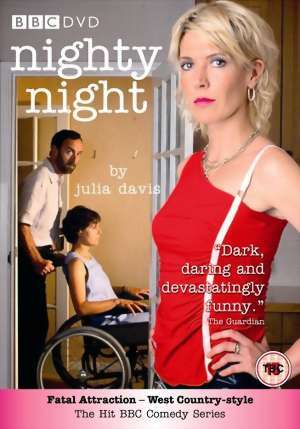
Julia Davis

Julia Davis has such an exquisite sense of pathos that I think to fully-enjoy her, a strong sado-masochistic streak is essential

The sadist in you will derive cathartic pleasure from the creative and unrelenting misery and indignity she subjects her (often unsympathetic) victims to. The masochist will then spend the next few hours wondering if you are a bad person to have laughed so loudly. Basically, you will wince and cringe and curl your toes...and enjoy every second of it.


Part of the reason I chose Davis to be the first comedian in my Wunderkammer is this great article in the Guardian. I particularly enjoyed it because it gives a very frank insight into what drives her to plumb the very darkest depths of the human psyche. It seems her fascination for what she describes as "wrong relationships" is her natural sensitivity to life's cruelties. 


In the best comic tradition, Davis' villains - and the scenarios they find themselves in - are absurd amplifications of reality. Trying to find the good in them is futile - these are unambiguously despicable people. Even so, they are still complex enough to avoid being clumsy pastiches. I think one reason for this is that her victims can generally be seen as complicit in their abuse. Take Nighty Night's Cathy: an insipid, hopelessly naive doormat who is too painfully polite to stand up to neighbour - and narcissistic sociopath - Jill. These willing victims were gloriously abundant in her earlier series, Human Remains, which she co-wrote with the equally pathos-attuned Rob Brydon. The excruciatingly submissive Pete in "An English Squeak", for example, and the tragic Michelle in "All Over My Glasses". However cruel the villain is, there is a certain sadistic satisfaction at watching them play with their quarry.

I'd be interested to hear your take on Julia Davis. Does she make you long for more, or just leave you cold? If you never seen her, this scene from Nighty Night will give you a good idea of what you're missing.


Thursday, 9 August 2012

Marriage equality

"All animals are equal,
but some animals are more equal than others"

Napoleon's interpretation of the Seven Commandments of Animal-ism could easily be adapted as the rallying cry of those who are opposed to the same-sex marriage bills currently being debated in many countries around the world including here in NZ. 


It seems that wherever you are in the world, one of the most common arguments is that 'the gays' have already got equality and we shouldn't push it any further. By pursuing the right to marry in exactly the same way as our heterosexual compatriots do, we're asking for some sort of 'special treatment'. Really?!? So what in the sweet name of Christ is a Civil Union, if not special treatment? 

In my mind, Civil Unions are the espousal equivalent of the placatory pat on the back. The runner's up prize. It's a gesture that says 'chin up old chap, you'll get there one day the world just isn't quite ready for you yet'; the conciliatory crumb tossed at homos hungry for 'more equality' (!) so they don't revolt. Well, it's just not good enough, NZ. Not by a long chalk. Enough of the Napoleon complex, it's time to get to grips with the real issue here. Under New Zealand law, homosexuals are still being denied equality. And that needs to be changed, and changed soon.

This afternoon, as many of my friends have done already, I signed  an online petition for marriage equality. I'd like to share with you what I wrote, in the hope that it will inspire a few more of you to do the same...


I would ask that all MPs currently undecided about this bill, as well as those who have already made up their minds to ask themselves this: 

By perpetuating a two-tier system, you are enshrining inequality and a sense of inferiority. Regardless of your own personal views, is this really a responsible message to be giving our rangatahi and tamariki? Surely you should be doing everything possible to ensure they grow up in a more tolerant world than the one we grew up in ourselves?

You should also ask yourself what kind of message a 'NO' vote sends out to the other developed nations who look to NZ as a leader in democracy, equality and human rights? I would suggest it would make us look old-fashioned, reactionary and lacking confidence or courage of convictions. 

Personally, I do not believe this should be a debate in the first place. But we live in a democracy, and that is how things must be done. You represent your electorate, but you also shape the future of NZ. So please let it be one that embraces diversity, but gives everyone equal rights and standing. Thank you.


Ya get me?
Anyway, I have absolutely no desire to repeat, re-litigate or re-visit the arguments for the full and immediate adoption of equal marriage rights here. If you still don't know what you think, these links should help you: